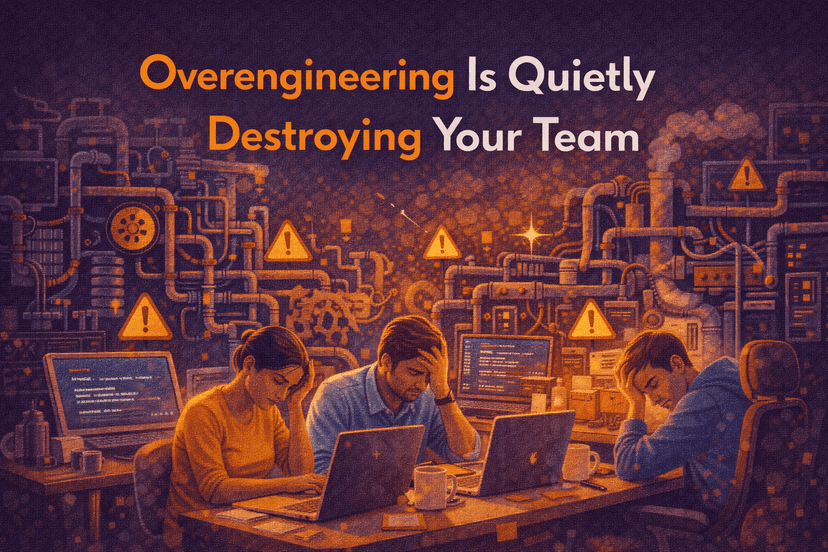
In most organizations, "overengineering" is a term reserved for software developers who build a space shuttle when the client asked for a bicycle. But overengineering isn't just a technical flaw; it’s a psychological one. It’s a management style. It’s a marketing strategy. It’s a culture.
Whether it’s a 15-step approval process for a simple social media post, a financial model with 500 variables, or a software architecture built for "Google-level scale" on Day 1, overengineering is the fastest way to demotivate a talented team and drain your capital.
The "Sophistication" Trap
We often equate complexity with value. We think that if a solution is simple, we haven't worked hard enough. This leads to what is known as The Complexity Bias—our tendency to look at a simple solution and assume it’s "too easy" to be effective.
As the legendary computer scientist Edsger W. Dijkstra noted:
"Simplicity is a great virtue but it requires hard work to achieve it and education to appreciate it. And to make matters worse: complexity sells better."
In business, complexity "sells" internally. It makes a manager look smart in a meeting. It makes a project feel "enterprise-grade." But for the people actually doing the work, it’s a straightjacket.
How Overengineering Destroys Morale
When you overengineer a process or a product, you aren't just wasting time; you are actively hurting your team’s psychological health:
The Loss of Agency: When a simple task requires five meetings and three layers of sign-off, high-performers feel like "cogs in a machine." They stop taking initiative because the "process" has become the boss.
The "Analysis Paralysis" Loop: Overengineered systems create so many variables that teams become terrified of making a move. They spend more time speculating about "what if" than they do observing "what is."
Burnout Without Output: Nothing burns out a team faster than working 60-hour weeks on things that never see the light of day. Overengineering ensures that a significant portion of your team’s energy is spent on "internal friction" rather than market impact.
Case Studies in Overengineering
In Marketing: A brand spends four months and $50k on a "brand guidelines" book before they’ve even run a $500 ad test to see if people actually like their message.
In Operations: A company implements an enterprise-grade ERP (Enterprise Resource Planning) system for a 10-person team when a shared Google Sheet would have sufficed. They spend the next year fighting the software instead of serving customers.
In Product: A team builds a fully automated, AI-driven recommendation engine before they even have 100 users to recommend things to.
The Antidote: The "Minimum Viable Process"
To save your team from the weight of overengineering, you must adopt a culture of Aggressive Simplicity.
Solve for Today, Not "Someday": If you don't have the problem right now, don't build the solution. Anticipating future scale is good; building for it before you have traction is a waste.
The "Two-Pizza Rule": Borrowed from Jeff Bezos—if a decision or a project requires a team so large you can't feed them with two pizzas, the communication overhead will lead to overengineering. Keep teams small and autonomous.
Reward Outcomes, Not Activity: Stop praising people for the "complexity" of their decks or the "elegance" of their systems. Start praising them for the speed and impact of their results.
Conclusion
The most successful companies in the world aren't the ones with the most complex systems; they are the ones that have stripped away everything that doesn't add value.
Overengineering is a form of "gold-plating" that your customers didn't ask for and your team can't sustain. If you want to go fast, stop building bridges to islands that don't exist yet. Build a raft, get to the island, and then—and only then—decide if you need a bridge.