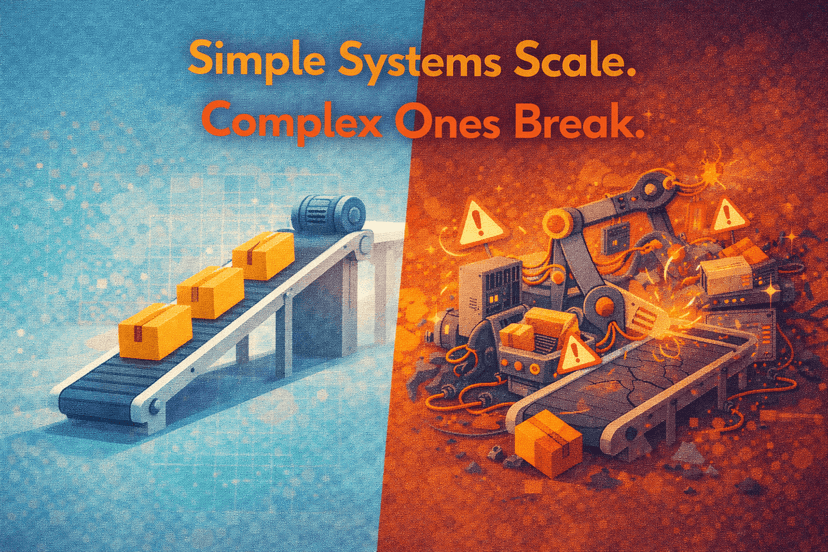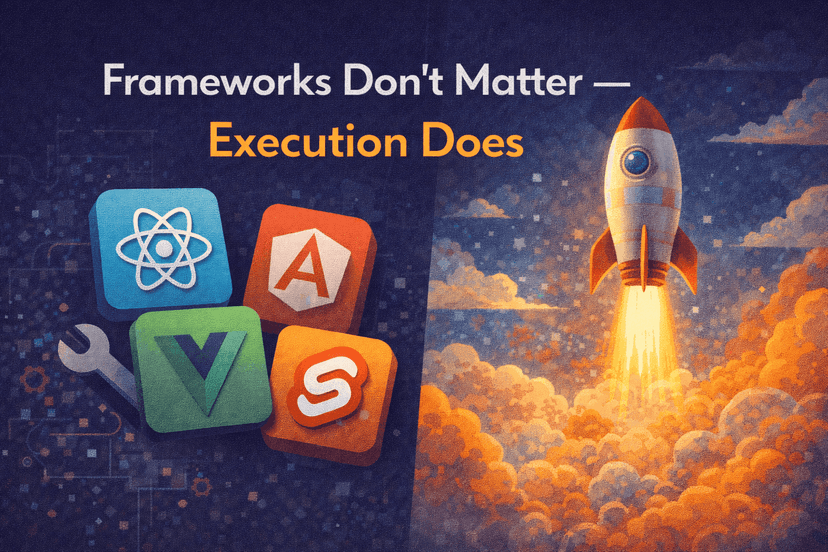
This topic addresses one of the most common forms of procrastination in the professional world: The Framework Trap. Whether it’s choosing a JavaScript library, a project management methodology, or a business strategy model, teams often spend months debating the structure of the work to avoid the terrifying reality of the work itself.
In the technology world, we are obsessed with "The How."
Engineers will spend weeks debating React vs. Vue. Managers will have month-long standoffs over Scrum vs. Kanban. Founders will agonize over whether to use The Lean Startup methodology or Jobs to Be Done.
We treat these frameworks like religions, believing that if we just pick the "right" one, success will be an automated byproduct. But here is the reality: A world-class team using a "bad" framework will always outperform a mediocre team using the "perfect" framework. Frameworks are just containers. Execution is the content.
The Mirage of the "Perfect" System
Why do we obsess over frameworks? Because choosing a framework feels like progress. It’s a low-risk activity that creates the illusion of momentum. If you spend three weeks researching the best CRM, you feel like you’ve "worked" on sales, even if you haven't made a single cold call.
Steve Jobs famously addressed this obsession with the "idea" or the "process" over the actual craft:
"To me, ideas are worth nothing unless executed. They are just a multiplier. Execution is worth millions... [People] think a really great idea is 90% of the work. The problem with that is that there’s just a tremendous amount of craftsmanship in between a great idea and a great product."
The same applies to frameworks. A framework is just an idea of how work should happen. It is not the work itself.
The "Execution Gap" in Tech and Business
In technology, we see this play out in the "Tech Stack" debate. Companies spend millions migrating to a newer, trendier framework (like moving from a monolith to microservices) because they believe it will solve their slow delivery times.
Six months later, they are still slow. Why? Because the bottleneck wasn't the code structure—it was the culture of indecision, the lack of clear requirements, or poor communication. They changed the "container," but they didn't change the "execution."
Derek Sivers, founder of CD Baby, created a famous mental model for this:
"Ideas are just a multiplier of execution. An 'awful' idea is worth $1. A 'brilliant' idea is worth $20. But execution is the real money. 'Weak' execution is worth $1,000, while 'Brilliant' execution is worth $10,000,000."
If you apply this to frameworks: A "brilliant" framework with "no" execution equals zero results.
Why Most Frameworks Fail
Frameworks fail not because they are inherently flawed, but because they are applied as a "silver bullet" to solve human problems.
Frameworks can’t replace talent: No project management tool can make a bad designer good.
Frameworks can’t replace clarity: No "Agile" ceremony can fix a founder who doesn't know what they want to build.
Frameworks create "Process Overhead": When the framework becomes more important than the output, you start having "meetings about meetings." This is the death of execution.
How to Prioritize Execution Over Structure
If you want to stop the "Framework Fever" in your organization, shift your focus to these three principles:
The "One-Week" Rule: If you can’t decide on a framework within a week, pick the one you know best and start building. The time saved by not switching is usually greater than the efficiency gain of the "better" tool.
Focus on the Output, Not the Ceremony: If your team is shipping high-quality code and hitting deadlines, it doesn't matter if they aren't following every single rule of "Scrum." Don't break what is already working just to fit a textbook definition.
Build "Just Enough" Process: Start with zero framework. Add a rule or a tool only when a specific pain point becomes unbearable. A framework should be a solution to a problem you actually have, not a preventative measure for a problem you might never encounter.
Conclusion
The "perfect" framework is the one that stays out of your way. Whether you are coding a new app, launching a marketing campaign, or scaling a sales team, remember: the market doesn't care about your internal processes. They care about your product.
Stop debating the map. Start driving the car.